Meta-Science of Columbite-Tantalite

As one of the very few experts in the field of Meta-Science and Resonance, I have been asked by many customers to write about the unique and extraordinary properties of Columbite-Tantalite.  I have carried this mineral  at Life’s Treasures for many years, and have personally witnessed many of the Meta-Science properties listed.  Though rare and hard to get, I highly reccommend them to my customers.
Metaphysical Properties: Columbite-Tantalite

Columbite can be used to activate all chakras and to provide for equilibrium between the physical and spiritual selves. Provides protection in ones environment and personal property. An excellent / powerful grounding stone, used to dispel negative energy and to cleanse an environment of negativity. Assists one in decision-making, and brings flashes of insight with respect to problem solving.

Tantalite can be used to deflect and protect against negativity. Acts to preserve one from being victimized by the energy of another. Has been used as an energy deflector and is an excellent stone for those who may be exposed to excessive amounts of radiation. Provides an increase in physical endurance and emotional equilibrium.


Scientific Properties:  Columbite-Tantalite aka “Coltan”

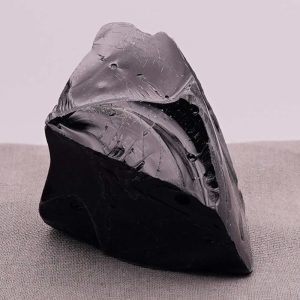
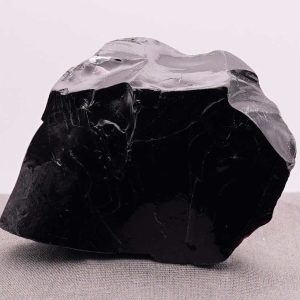
Columbite, [(Fe, Mn)(Nb, Ta)2O6], also called ferrocolumbite, niobite, niobite-tantalite and columbate is a dull gray to black mineral that is an ore of niobium and tantalum. It has a sub-metallic luster and a high specific gravity and is a niobate of iron and manganese, containing tantalate of iron. Ferrocolumbite is a natural oxide of niobium, tantalum, ferrous iron, and manganese.

Tantalite, [(Fe, Mn) Ta2O6], is a mineral that is close to columbite. In fact, the two are often grouped together as a semi-singular mineral called columbite-tantalite in many mineral guides. But Tantalite has a much greater specific gravity than Columbite (8.0+ compared to Columbite’s 5.2). Tantalite is black to brown in both color and streak. Manganese rich tantalites can be brown and translucent. Tantalite is used as an ore of tantalum and niobium and as mineral specimens and occur in pegmatites. Tantalite is largely found mixed with columbite in an ore called coltan.

Coltan is the colloquial African name for columbite-tantalite, a metallic ore from which are extracted the elements niobium and tantalum. In appearance, coltan is a dull gray to black mineral. Minerals containing high concentrates of tantalum are usually referred to as tantalite. Tantalite often also contains niobium. Those containing higher concentrates of Niobium are usually referred to as columbite. Columbite often also contains tantalum. The two ores naturally occur together, and only through mineral analysis can they be distinguished.

Niobium and Tantalum belong to a important class of metals known as Refractory metals. Refractory metals are extraordinarily resistant to heat and wear. Included in this class are the five metals tungsten, molybdenum, niobium, tantalum and rhenium.

The high melting point makes them useful in many applications. Household incandescent bulbs contain refractory metals in their tungsten filaments, and nearly all manufactured goods, particularly those containing metal or electronics, contain or were produced using refractory metals. Refractory metals are used in lighting, tools, lubricants, nuclear reaction control rods, as catalysts, and for their chemical or electrical properties.

Tantalum
A rare, hard, blue-grey, lustrous transition metal, tantalum is one of the most corrosion resistant substances available. Many important uses have been found for tantalum owing to this property, particularly in the medical and surgical fields, and also in harsh acidic environments. It is also used to make superior electrolytic capacitors. Tantalum films provide the most capacitance per volume of any substance, and allow miniaturization of electronic components and circuitry. Cellular phones and computers contain tantalum capacitors.

Tantalum is dark, dense, ductile, very hard, easily fabricated, and highly conductive of heat and electricity. The metal is renowned for its resistance to corrosion by acids; in fact, at temperatures below 150 °C tantalum is almost completely immune to attack by the normally aggressive aqua regia (a highly corrosive, fuming yellow or red solution. The mixture is formed by freshly mixing concentrated nitric acid and concentrated hydrochloric acid. It was so named because it can dissolve the so-called royal, or noble metals gold and platinum). Tantalum’s high melting point of 3017 °C is exceeded only by tungsten and rhenium for metals, and carbon.

Tantalum Uses
Electronics

The major use for tantalum, as the metal powder, is in the production of electronic components, mainly capacitors and some high-power resistors. Tantalum electrolytic capacitors exploit the tendency of tantalum to form a protective oxide surface layer, using tantalum powder, pressed into a pellet shape, as one “plate” of the capacitor, the oxide as the dielectric, and an electrolytic solution or conductive solid as the other “plate”. Because the dielectric layer can be very thin (thinner than the similar layer in, for instance, an aluminium electrolytic capacitor), a high capacitance can be achieved in a small volume. Because of the size and weight advantages, tantalum capacitors are attractive for portable telephones, pagers, personal computers, and automotive electronics.

Alloys
Tantalum is also used to produce a variety of alloys that have high melting points, are strong and have good ductility. Alloyed with other metals, it is also used in making carbide tools for metalworking equipment and in the production of superalloys for jet engine components, chemical process equipment, nuclear reactors, and missile parts. Because of its ductility, tantalum can be drawn into fine wires or filaments, which are used for evaporating metals such as aluminum. Due to the fact that it resists attack by body fluids and is nonirritating, tantalum is widely used in making surgical instruments and implants. For example, porous tantalum coatings are used in the construction of orthopedic implants due to tantalum’s ability to form a direct bond to hard tissue.

Tantalum is inert against most acids except hydrofluoric acid and hot sulfuric acid, also hot alkaline solutions cause tantalum to corrode. This property makes it an ideal metal for chemical reaction vessels and pipes for corrosive liquids. Heat exchanging coils for the steam heating of hydrochloric acid are made from tantalum. Tantalum was extensively used in the production of ultra high frequency electron tubes for radio transmitters. The tantalum is capable to capture oxygen and nitrogen by forming nitrides and oxides and therefore helps to sustain the high vacuum needed for the tubes.

Niobium
Niobium is nearly always found together with tantalum, and was named after Niobe, the daughter of the mythical Greek king Tantalus for whom tantalum was named. Niobium has many uses, some of which it shares with other refractory metals. It is unique in that it can be worked through annealing to achieve a wide range of strength and elasticity, and is the least dense of the refractory metals. It can also be found in electrolytic capacitors and in the most practical superconducting alloys. Niobium can be found in aircraft gas turbines, vacuum tubes and nuclear reactors.

Niobium is a lustrous, grey, ductile, paramagnetic metal in group 5 of the periodic table, that takes on a bluish tinge when exposed to air at room temperature for extended periods. Despite presenting a high melting point in elemental form (2,468 °C), it has a low density in comparison to other refractory metals. Furthermore, it is corrosion resistant, exhibits superconductivity properties, and forms dielectric oxide layers.

Niobium Uses
Superconducting magnets

Niobium becomes a superconductor when lowered to cryogenic temperatures. At atmospheric pressure, it has the highest critical temperature of the elemental superconductors: 9.2 K. Niobium has the largest magnetic penetration depth of any element. In addition, it is one of the three elemental Type II superconductors, along with vanadium and technetium. Niobium-tin and niobium-titanium alloys are used as wires for superconducting magnets capable of producing exceedingly strong magnetic fields. These superconducting magnets are used in Magnetic resonance imaging and Nuclear magnetic resonance instruments as well as in for particle accelerators. For example, the Large Hadron Collider uses 600 metric tons of superconducting strands, while the International Thermonuclear Experimental Reactor is estimated to use 600 metric tonnes of Nb3Sn strands and 250 metric tonnes of NbTi strands. In 1992 alone, niobium-titanium wires were used to construct more than 1 billion US dollars worth of clinical magnetic resonance imaging systems.

Superalloys
Appreciable amounts of the element, either in its pure form or in the form of high-purity ferroniobium and nickel niobium, are used in nickel-, cobalt-, and iron-base superalloys for such applications as jet engine components, gas turbines, rocket sub assemblies, and heat resisting and combustion equipment.

Steel production
Niobium is an effective micro-alloying element for steel. Adding niobium to the steel causes the formation of niobium carbide and niobium nitride within the structure of the steel. These compounds improve the grain refining, retardation of recrystallization, and precipitation hardening of the steel. These effects in turn increase the toughness, strength, formability, and weld-ability of the micro-alloyed steel. Micro-alloyed stainless steels have a niobium content of less than 0.1%. It is an important alloy addition to high strength low alloy steels which are widely used as structural components in modern automobiles. These niobium containing alloys are strong and are often used in pipeline construction.

The Meta-Science of Resonance forms the bridge between Metaphysics and Science.

Meta-Science Properties:
Within the Columbite-Tantalite ore, resonates the unique vibrational properties of Niobium and Tantalum. Both impart strength of character, deflecting unwanted energies, and extraordinarily resistance to negative energy and heated situations. Niobium and Tantalum increases flexibility while maintaining ones inner strength, shielding against corrosive environments, and increases physical endurance and emotional equilibrium. Combined, these two elements provide a positive sphere of protection and influence, powerfully grounding while maintaining ones high frequency state. They increase physical as well as mental / spiritual energy, patience and endurance. Niobium and Tantalum enhance clear thinking, assisting in decision-making, with inspirational flashes of insight with respect to problem solving.

Tantalum increases ones radiance, while preventing physical as well as mental / spiritual burnout. It helps to relieve stress, irritation and discomfort. Tantalum provides a medium / bridge between the physical and the spiritual, assisting with the energetic merging of the two. As a resonant capacitor, Tantalum can be used to store energy, to resonate with higher frequencies, or to link spiritual and physical forces.

Niobium’s superconductivity and enhanced magnetic field properties create the phenomenon of zero electrical resistance and the exclusion of the interior magnetic field. Very high states of be-ing / resonance can be maintained, with little if any energy loss. One is transported beyond the 3rd dimensional boundaries while maintaining a grounded physical connection. While in this state, one is able to work in possibility waves, fractal consciousness, and the true nature of reality.

Columbite-Tantalite ore generates a resonant light field, geometrically in proportion following the golden mean sacred geometry by size. With this stone, size does matter. A larger specimen will generate a much larger geometrically factored field than a smaller one. With this in mind, one large piece will have a much stronger and larger field than the same weight in smaller pieces. The analogy I use would be to compare the output of a 10 watt flashlight to ten 1 watt penlights. The flashlight will be much brighter, reaching out much further in illumination than the ten penlights used together.

© Mark Naea, Life’s Treasures Kauai 2009, no reproduction without written consent.

Back