Subscribe RSS

Amethyst – Stone of Spirituality and Contentment

July 1st, 2009      Email This Post Email This Post

Meta-Science and Healing Properties

Known as the “stone of spirituality and contentment”, it bestows strength, stability and peace, the peace being the perfect peace which was present prior to birth.  Amethyst is a good stone for all beginners new to crystal healing. It will not only encourage the opening of intuition, but will also allow the possibility of change to take root.

As we continue to grow personally, the beautiful violet of Amethyst will make the journey a very pleasant one. It helps to become open to the possibilities that surround us! Some use the energetic qualities of Amethyst to increase self-worth and spiritual peace. It is said to assist with healing alcoholism, compulsive behaviors, and addictions of all kinds.

Amethyst brings energies of stability, peace, calm, balance, courage and inner strength. It has been used to protect against psychic attacks. On the spiritual level, amethyst can help to open communication with angels, telepathy and other psychic abilities.

It is an excellent stone for meditation or dream work, past life work, and can help you see your path. It has also been used to help ease the pain of grief, and promote happiness. Amethysts have a soothing and relaxing effect on people, they promote healthy sleep habits when placed on the body or under the pillow.
Amethyst promotes shrewdness in business matters, gives victory and quickens the mind to help control negative thoughts. Because the stone has transmutational energies, it helps to open gateways into intense and transforming spiritual experiences, and can protect the wearer from negativity.

Known as a change stone, amethyst can bring about any type of change in your life and consciousness. It also breaks up old emotional thought processes and assists psychic opening in a grounding manner..

 Numerology- Amethyst vibrates to the number 3. The number 3 is about joy and creativity.

 Gemological Properties - Amethyst is a variety of Quartz, which is a group of mineral species from the hexagonal (trigonal) crystal system. The chemical composition is SIO2, refractive index is 1.544-1.553 with a specific gravity of 2.66. The Mohs Hardness of Amethyst is 7.

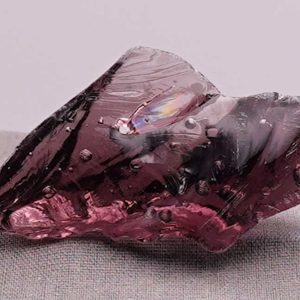
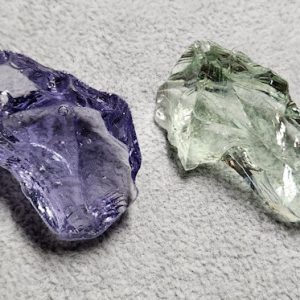
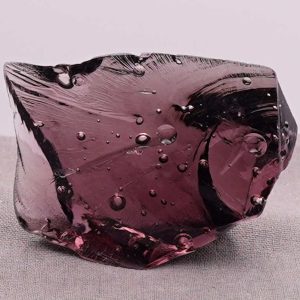
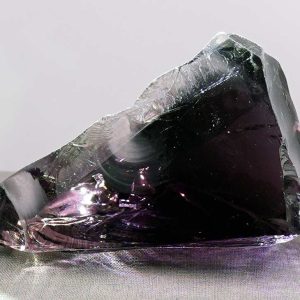
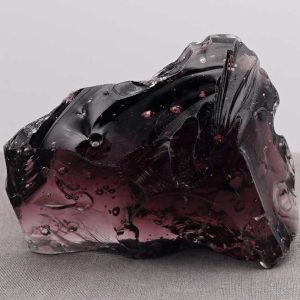
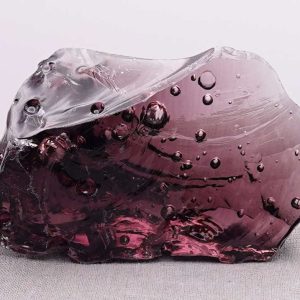
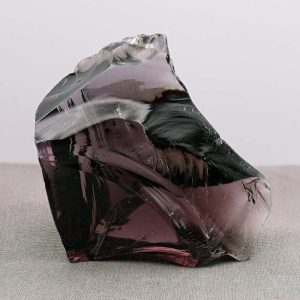
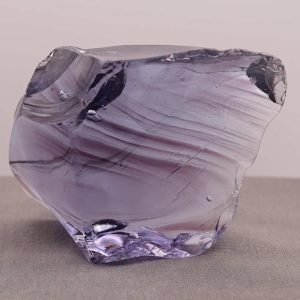
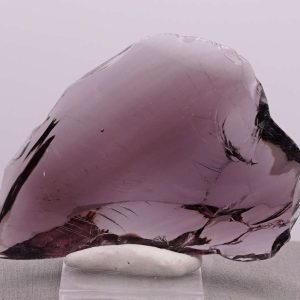
It ranges in color from pale lilac to deep purple, the pale colors are sometimes called “Rose de France”. The deep colors are the most valuable, particularly a rich purple with rose flashes. Amethyst is mined in Brazil, Uruguay, Bolivia and Argentina, as well as in Zambia, Namibia and other African countries.

Generally, amethyst from South America tends to be available in larger sizes than African amethyst, but amethyst from Africa has the reputation for having better, more saturated, color in small sizes. Very dark amethyst, mostly in small sizes, is also mined in Australia.

The Color Violet – Violet is the highest spiritual color and vibration, denoting power within, psychic and inner development, influence and transcendence. Some say the color violet represents the “flame of transmutation” that burns negativity and makes new growth possible. Others feel it is a color that brings one closer to the goddess/god in all of us or the intuitive skill of knowing the goddess and god within.

There are no negative attributes to this color. What is interesting is that violet is composed of red, blue and purple. Depending on the main color of your violet stone, for example red, it would also help to bring energy into your system. If the main color of your ‘violet’ stone is blue, then it will bring you strong inspirational creativity. And if your stone is more purple or a lighter tone of violet it symbolizes a developed love and respect for others.

For physical healing you would use a violet gemstone to aid stress and all stress related diseases, as well as mental disorders, tumors and diseases of the head and skull, and high blood pressure.

History

Amethyst gets its name from the Greek word amethustos, meaning “not drunken”. The origin of amethyst name and its healing properties come from a Greek legend telling the story of how Dionysus, god of wine and intoxication was angry from one mortal that he swore revenge on all mortals who did not get drunk and celebrate.

A young maiden called Amethyst was on her way to pay tribute to the goddess Diana, when she was captured by the furious Dionysus. Being so innocent she was not familiar with drinking and intoxication. Dionysus brought two tigers to eat her and sat back with his wine to watch.

Amethyst called upon Diana for help, who turned Amethyst into a crystalline quartz statue to protect her. Seeing Amethyst like that, Dionysus wept tears of wine, which stained the quartz purple creating the gemstone amethyst. Owing to its name and mythological origin, it was believed that the wearer of amethyst jewelry is immune to becoming intoxicated. Moreover, amethyst used to be carved into cups with the belief that drinking from it helps to cure and avoid positioning.

Purple color has long been associated with royalty. Because of its purple color and beauty, amethyst was favored by the royals for centuries. Amethyst necklaces and jewelry were found buried in the tombs of Ancient Egyptians, and was a personal favorite of Queen Catherine the Great.

It is still being used today, with the rare ones decorating the British Crown Jewels. Amethyst is mentioned in the Old Testament and the Bible, and is thought to encourage celibacy and symbolize holiness. Cardinals and Bishops in the Catholic Church wear rings with a large amethyst as a part of their office. In Tibet, amethyst is a sacred gem to Buddha.

 Geological Information

Amethyst is a high-quality form of quartz crystal, naturally found as clusters in a nodular stone. They are found sometimes in volcanic vugs or small cavities in rocks. The chemical name for Amethyst is Silicon Dioxide. Amethyst obtains its color through a combination of manganese impurities and iron.

The purple color comes from the presence of manganese, while the existence of iron in certain quantities controls the intensity of the color. Artificial heating treatments have been used on Amethyst to produce popular gems known as Citrine and Ametrine (400 and 500 degrees Celsius). Amethyst measures 7 on Mohs’ hardness scale.

One of the largest cut amethysts in the world is 343 carats and is being displayed at the National History Museum in London. Very dark stones are sometimes heated to enhance color.

Geographical Information

Amethyst is found globally, at very affordable prices, in countries like Canada, Brazil, Uruguay, Mexico, United States, Zambia, Namibia and other African countries. Amethyst has been named the state gemstone of South Carolina.

Amethyst deposits can also be found in other countries such as: Germany, Italy, Bolivia, Madagascar, India and Sri Lanka. However, the quality of amethyst differs by region and source. Amethyst coming from South America is likely larger than the African amethyst. However, Amethyst from Africa is known for better and deeper color. Dark amethyst in small sizes is also found in Australia. 

Physical and Optical Properties

Amethyst is available in a wide variety of sizes and shapes. Large stones could be sold in free sizes but usually amethyst is cut in certain dimensions.

This semi-precious stone is unique in color. With colors range from pale lilac to deep purple, including a reddish shades sometimes, amethyst is the most valuable form of quartz. In jewelry, the deepest shades of Amethyst, which maintain their transparency, are considered the most precious.

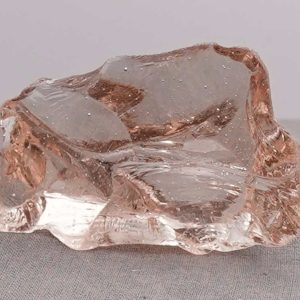
A unique Brazilian amethyst in pastel shade of lilac with pinkish tones is known as Rose de France Amethyst. It is a very clean gemstone and was very popular during the Victorian age. Though it is frequently found in antique jewelry, Rose de France Amethyst is becoming popular again nowadays.

Amethyst in Jewelry

Amethyst is the traditional gem for the 4th, 6th and 17th wedding anniversaries. It is used as faceted stones and is carved in various shapes. Amethyst gemstones are used in necklaces, earrings, rings, bracelets, brooches, and pendants. This highly praised stone is also shaped and used other items such as hair accessories, key rings and watches.

© Mark Naea, Life’s Treasures Kauai 2009, no reproduction without written consent.

    Posted in Crystal Properties, Crystals, Meta-Science, Our Picks | Comments Off